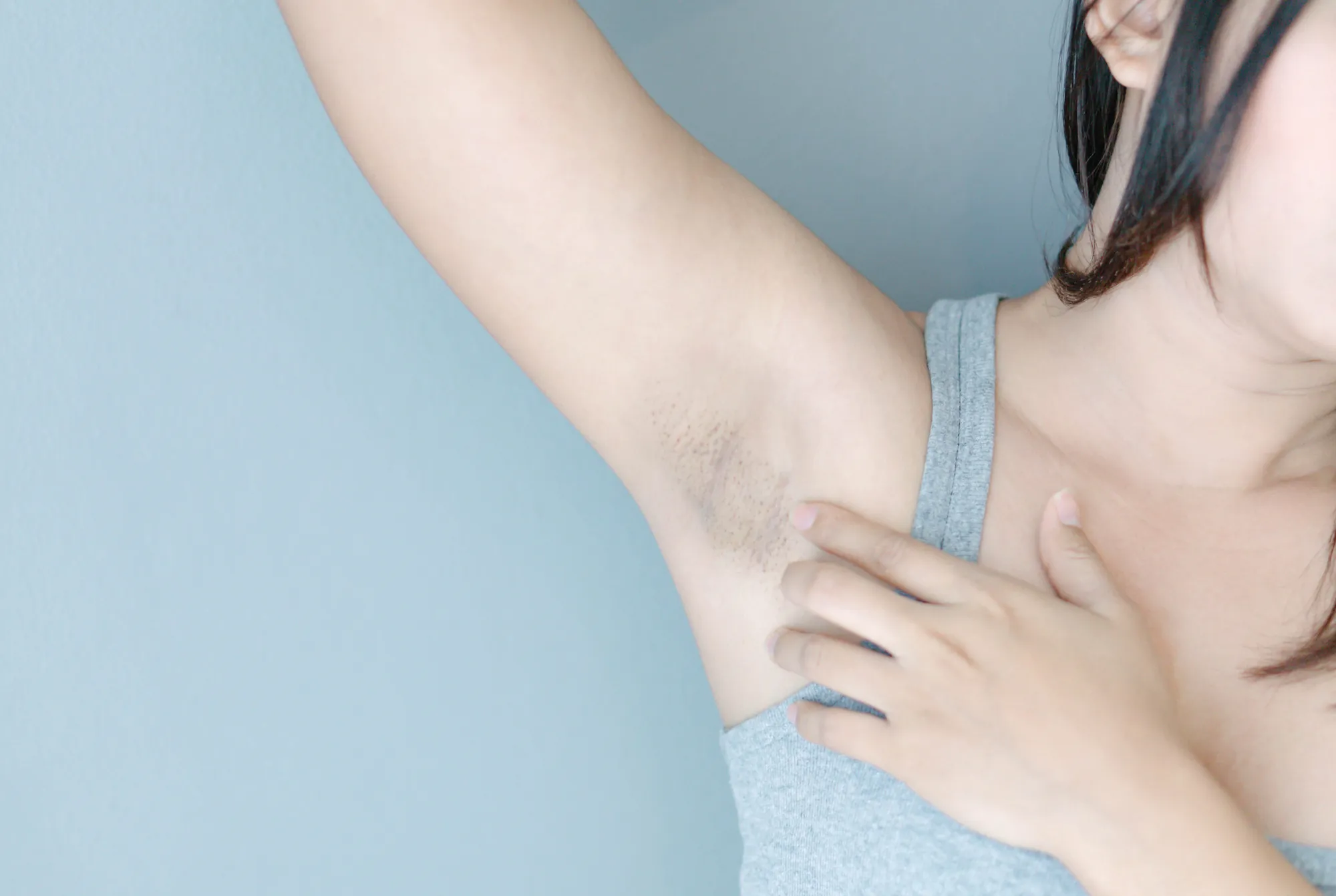
Hidradenitis Suppurativa (HS)
Hidradenitis Suppurativa Treatment in Delaware
Hidradenitis suppurativa can affect your comfort, confidence, and daily life. Premier Dermatology provides individualized HS care and a long-term plan that fits your needs.
Dr. Kiera Booth, M.D., FAAD, provides dedicated care for patients living with hidradenitis suppurativa, with an emphasis on accurate evaluation, treatment planning, flare management, and ongoing follow-up.

Call 302-633-7550. In-person HS care is available in Newark and North Wilmington, Delaware.
What is hidradenitis suppurativa?
Hidradenitis suppurativa, or HS, is a chronic inflammatory skin condition. It commonly develops where skin rubs together, such as the underarms, groin, buttocks, or beneath the breasts.
Skin inflammation can cause redness, swelling, itching, pain, sores, and drainage. People with HS also have systemic inflammation that can cause joint pain or fatigue.
What are the common signs and symptoms of HS?
Common signs and symptoms include:
- Tender or painful lumps under the skin
- Recurring boils or abscess-like areas
- Drainage or sores that heal slowly
- Tunnels beneath the skin
- Scarring after repeated flares
What causes HS, and how does it develop?
The brochure describes HS as a condition caused by an overactive immune system that triggers recurring inflammation. It notes that HS is not exactly an “autoimmune disease.”
HS begins in the hair follicle, not the sweat glands. Inflammation causes the skin cells lining the hair follicle to stick together and block the opening. As these cells build up, the follicle stretches and becomes weaker.
Over time, the follicle can rupture beneath the skin, triggering more inflammation and sometimes leading to drainage.
Is HS caused by poor hygiene?
No. HS is not caused by poor hygiene, smoking, or weight. It is a medical condition and can be influenced by things we are exposed to.
Early evaluation and ongoing care may help reduce symptoms, manage flares, and limit progression.
How is hidradenitis suppurativa treated?
There is currently no cure for HS, but treatment options can help reduce symptoms, manage flares, prevent complications, and improve quality of life.
HS is typically treated using a combination of approaches rather than a single medication or procedure. Because HS affects people differently, treatment plans are highly individualized and may change over time.
Treatment recommendations may depend on:
- Your symptoms and how long you have had them
- How often flares occur
- Areas of the body affected
- The presence of tunnels or scarring
- How HS affects your daily life
What HS treatment options are available at Premier Dermatology?
Your visit may include a review of your symptoms, affected areas, prior treatments, and how HS affects your daily life.
Treatment may include the following approaches.
Prescription topical or oral medications
Prescription topical or oral medications may be included in your treatment plan.
Biologic or other advanced therapies
Biologic or other advanced therapies may be considered when appropriate.
Flare management
Your care may include strategies to manage active flares and discomfort.
In-office procedures or surgical options
In-office procedures or surgical options may be included when indicated.
Long-term monitoring
Ongoing care may include long-term monitoring and adjustments to your treatment plan.
When should you schedule an HS consultation?
Consider an evaluation if painful bumps or draining areas:
- Keep returning
- Leave scars
- Occur in multiple areas
- Interfere with movement, work, exercise, or everyday activities
Call 302-633-7550 to schedule an HS consultation.
Meet Dr. Kiera Booth, M.D., FAAD

Dr. Kiera Booth provides dedicated care for patients living with hidradenitis suppurativa. Her care emphasizes accurate evaluation, treatment planning, flare management, and ongoing follow-up.
Dr. Booth is listed in the Hidradenitis Suppurativa Foundation’s provider directory and provides experienced, in-person care for HS patients in Delaware.
Where can you receive HS care in Delaware?
Premier Dermatology provides in-person HS care in Newark and North Wilmington.
Newark, Delaware
537 Stanton Christiana Road
Newark, DE 19713
North Wilmington, Delaware
1401 Foulk Road
Wilmington, DE 19803
Call 302-633-7550.
Frequently asked questions
- What is hidradenitis suppurativa (HS)?
- Hidradenitis suppurativa, or HS, is a chronic inflammatory skin condition that causes recurring painful lumps, nodules, or abscesses under the skin. It most commonly affects areas where skin rubs together, such as the underarms, groin, buttocks, inner thighs, and beneath the breasts. Over time, HS can lead to drainage, tunnels beneath the skin, and scarring. NIAMS
- What causes hidradenitis suppurativa?
- The exact cause of hidradenitis suppurativa is not fully understood. HS begins in the hair follicle and involves inflammation, with genetic, hormonal, immune, and environmental factors believed to play a role. HS is not caused by poor hygiene, and while smoking and excess weight may be associated with increased risk or more severe symptoms, they are not considered the underlying cause of the condition. American Academy of Dermatology
- What are the symptoms of hidradenitis suppurativa, and how do I know if I have it?
- Common HS symptoms include painful lumps beneath the skin, recurring boil-like areas, drainage, sores that heal slowly, scarring, and tunnels beneath the skin. HS often returns in the same areas, particularly the underarms, groin, buttocks, inner thighs, or beneath the breasts. Because HS can resemble acne, cysts, boils, or other skin conditions, a dermatologist should evaluate recurring symptoms. American Academy of Dermatology
- What are the stages of hidradenitis suppurativa?
- HS is often described using three Hurley stages. Stage I generally involves isolated abscesses without tunnels or significant scarring. Stage II includes recurring abscesses with tunnel formation and scarring, while Stage III involves more widespread disease with interconnected tunnels and abscesses. Your stage is only one factor a dermatologist considers when creating a treatment plan. DermNet®
- How is hidradenitis suppurativa treated?
- Treatment depends on the location, severity, frequency of flares, presence of tunnels or scarring, and how HS affects daily life. Treatment may include topical or oral medications, biologic or other advanced therapies, strategies for managing active flares, in-office procedures, surgery when appropriate, wound care, and ongoing monitoring. Many patients need a combination of approaches rather than a single treatment. American Academy of Dermatology The Premier brochure similarly emphasizes individualized care that can include medications, biologic therapies, procedures or surgical options, and long-term monitoring.
- Can hidradenitis suppurativa be cured or go away permanently?
- There is currently no cure for hidradenitis suppurativa, but treatment can help reduce flare-ups, manage symptoms, prevent complications, and slow progression. Because HS can change over time, ongoing dermatologic care and adjustments to the treatment plan may be important for long-term management. American Academy of Dermatology
- What triggers hidradenitis suppurativa flare-ups?
- HS triggers can vary from person to person. Skin friction and irritation, tight clothing, heat and sweating, hormonal changes, smoking, and excess weight may contribute to worsening symptoms or flare-ups in some people. Identifying individual triggers and developing a skin-care and treatment plan with a dermatologist can help manage the condition. American Academy of Dermatology
- Is hidradenitis suppurativa an autoimmune disease?
- HS is an inflammatory disease involving the immune system, but whether it should be classified specifically as an autoimmune disease is still being studied. Researchers have found immune-system abnormalities in people with HS, but more research is needed to fully understand how the immune system contributes to the condition. American Academy of Dermatology
- Does diet affect hidradenitis suppurativa?
- There is no single diet proven to treat or cure hidradenitis suppurativa. Early research suggests that dietary changes and weight management may help reduce symptoms or flare-ups for some people, but results vary and more research is needed. A dermatologist can help determine whether lifestyle or dietary changes should be part of an overall HS treatment plan. American Academy of Dermatology
- What kind of doctor treats hidradenitis suppurativa?
- A dermatologist is typically the specialist who diagnoses and treats hidradenitis suppurativa. Dermatologists can distinguish HS from conditions such as acne, cysts, or recurring boils and develop an individualized medical and procedural treatment plan. American Academy of Dermatology At Premier Dermatology, board-certified dermatologist Dr. Kiera Booth has a special clinical interest in HS and advanced training in its diagnosis and treatment. Premier Dermatology The client-provided materials specifically position her for HS care in Newark and North Wilmington.

